In the fields of thermal power generation and industrial production, boilers serve as the core equipment for energy conversion. As a critical heating component, the superheater is tasked with heating saturated steam into high-temperature superheated steam, acting as a vital link in improving energy efficiency and ensuring stable system operation. This article provides a comprehensive analysis of this key equipment, covering its definition, classification, working principles, common failures, and maintenance essentials.
I. Core Definition and Role of Superheaters
A superheater is a surface-type heat exchanger designed to heat saturated steam from the steam drum to a specified superheated temperature under nearly constant pressure. Its core functions strike a balance between efficiency enhancement and safety protection:
Efficiency Enhancement: By converting saturated steam into superheated steam, it increases the steam’s enthalpy and work capacity, thereby improving the thermal cycle efficiency of steam power units. This is why superheaters are standard equipment in utility, locomotive, and marine boilers—while many industrial boilers omit them if only saturated steam is required.
Safety and Protection: It stabilizes steam temperature to prevent equipment damage caused by parameter fluctuations. Additionally, it reduces the flue gas temperature at the furnace outlet, protecting subsequent heating surfaces and extending the overall service life of the boiler system.
II. Classification: Adapting to Diverse Boiler Scenarios
Superheaters are classified by heat transfer methods and structural layouts to meet the requirements of different operating conditions, often used in combination in various boiler types.
1. By Heat Transfer Method (Core Classification)
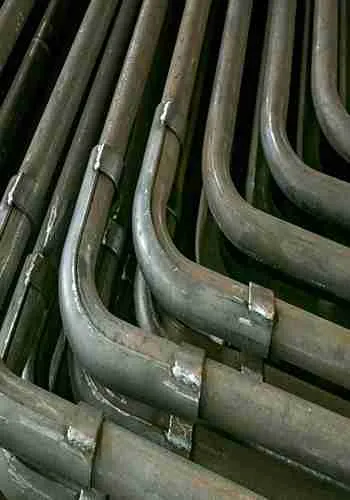
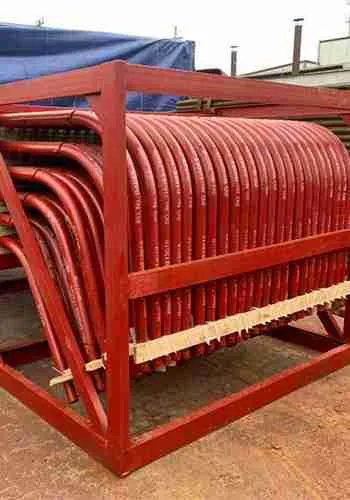
Convection Superheater: The most widely used type, composed of serpentine tubes and headers, and installed in flue gas paths with temperatures ranging from 450°C to 1000°C. It relies primarily on convective heat transfer, featuring a simple structure and easy installation. It serves as the main superheating device for small and medium-sized boilers and a key component of large-scale boilers.
Radiant Superheater: Mounted on the inner walls or upper part of the furnace, it directly absorbs radiant heat from the flame. With high heat transfer efficiency and temperature resistance, it is suitable for the high-temperature sections of high-parameter boilers.
Semi-radiant Superheater: Located at the top of the furnace or the furnace outlet (nose area), it utilizes both radiant and convective heat transfer. It adapts well to varying flue gas temperatures and helps optimize steam temperature regulation performance.
2. By Structure and Layout
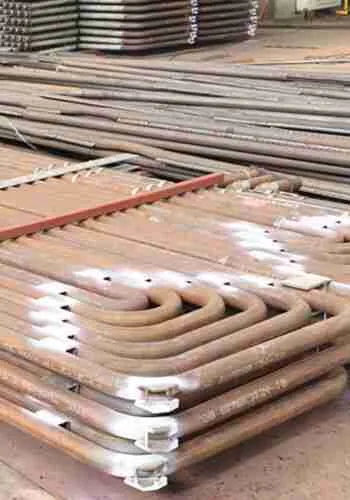
Serpentine Tube Type: Tubes are bent into a serpentine shape (typically 30–60 mm in diameter) to maximize heat transfer area, which is the main structural form of convection superheaters.
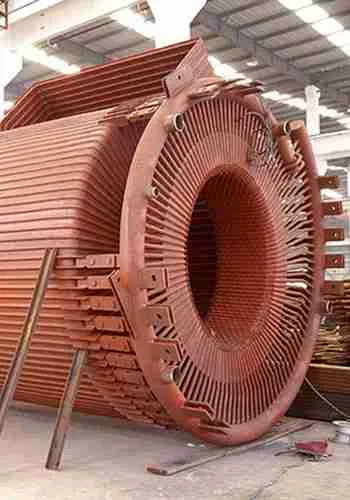
Platen (Pendant) Type: Composed of multiple tube panels hung in the upper furnace, it is usually applied in large-scale utility boilers (above 10 MPa) to handle high heat loads.
Wall-attached Type: Installed against the furnace walls, it absorbs radiant heat while protecting the refractory lining, and is rarely used independently.
Wrapped/Enclosure Type: Forms the roof and walls of horizontal flues and back-pass ducts, simplifying the boiler structure and reducing weight.
III. Working Principle: Synergy of Heat Transfer and Temperature Control
The operation of a superheater follows a three-step heat transfer process: flue gas releasing heat → tube wall conducting heat → steam absorbing heat.
Temperature Regulation Mechanisms
Excessively high steam temperatures can cause tube bursts, while excessively low temperatures reduce energy efficiency. Therefore, effective temperature control is crucial, with three common methods:
Attemperation (Desuperheating): Injecting high-purity feed water into superheated steam to precisely reduce its temperature, which is the most widely used method.
Flue Gas Adjustment: Adjusting flue gas dampers to change gas flow distribution or tilting burners to shift the flame center, thereby regulating heat absorption.
Surface Adjustment: Modifying the effective heating area or steam flow path to adapt to different load requirements.
IV. Common Failures and Root Causes
Superheaters operate in harsh environments characterized by high temperature, high pressure, and corrosion, making them prone to various failures. The main types and their root causes are as follows:
High-Temperature Oxidation & Corrosion: The tube wall reacts with oxygen in flue gas to form oxide scale; sulfur or chlorine in fuel accelerates external wall thinning. Poor steam quality can also cause internal scaling and overheating.
Erosion/Wear: Fly ash in flue gas scours the tube walls, especially at bends and gas corridors, leading to gradual thinning and eventual leakage.
Creep and Stress Relaxation: Long-term exposure to high temperature and constant pressure causes permanent plastic deformation (creep) of the tube material; excessive deformation or material degradation leads to failure, which is exacerbated by thermal stress.
Fatigue: Frequent boiler startups/shutdowns or load fluctuations generate cyclic thermal stress, causing thermal fatigue cracks; tube vibration can also lead to mechanical fatigue and leakage.
Slagging and Ash Fouling: Poor combustion results in ash deposition and slagging on tube surfaces, increasing thermal resistance, reducing heat transfer efficiency, and affecting boiler output.
V. Maintenance Essentials
Adhering to the principle of “Prevention First,” a comprehensive maintenance strategy is essential to ensure stable operation of superheaters:
Routine Inspection: Monitor key operating parameters, check tube appearance, and listen for abnormal sounds (indicating potential leaks).
Regular Testing: Conduct non-destructive testing (NDT) during boiler overhauls to measure tube wall thickness and detect cracks or defects.
Online Monitoring: Install thermocouples to real-time track tube metal temperatures, preventing localized overheating.
Cleaning: Use soot blowers regularly to remove ash accumulation and prevent slagging, ensuring efficient heat transfer.
VI. Conclusion
The superheater is an indispensable core component of boiler systems, whose performance directly determines the boiler’s efficiency, safety, and economic viability. As boilers develop toward higher parameters and larger capacities, superheaters will continue to evolve with advanced high-temperature and corrosion-resistant materials, as well as intelligent monitoring and control systems, providing strong support for the efficient utilization of energy.