In energy-consuming settings such as power plants and industrial boilers, there exists an understated yet vital piece of equipment: unlike the furnace that burns fiercely or the steam drum that occupies a prominent central position, it quietly reclaims massive amounts of wasted heat, serving as an “invisible hero” in reducing energy consumption and cutting costs — this is the economizer. Today, we will unravel the mystery of the economizer and gain insight into the working logic and core value of this “energy-saving expert.”
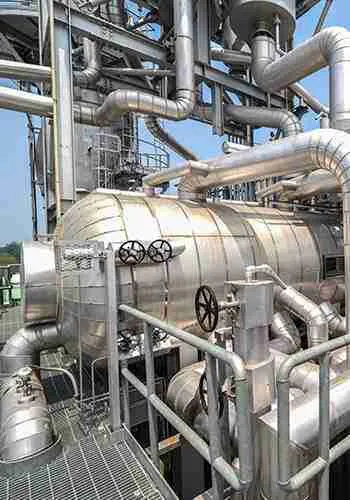
Mounted in the flue at the tail of the boiler, economizer is a key component for recovering waste heat from flue gas. Typically positioned before air-pre heater and after super heater or re heater, it acts as the “final heat recovery station” before flue gas is discharged into the atmosphere. High-temperature flue gas generated by combustion in the boiler furnace usually reaches 400~600℃, and even after being utilized by equipment like the super heater and re heater, it still carries substantial waste heat. Directly releasing this waste heat into the air would not only result in tremendous energy loss but also exacerbate environmental pressure. The core mission of the economizer is to capture this waste heat and use it to heat boiler feed water, thereby reducing fuel consumption and boosting boiler efficiency — this is also how it gets its name “economizer”. Put simply, the economizer is analogous to the return water device of a household water heater, as both enhance efficiency by recycling waste heat; the only difference is that it heats boiler feed water and conserves industrial fuels.
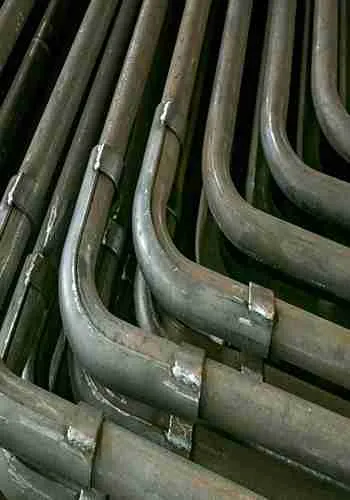
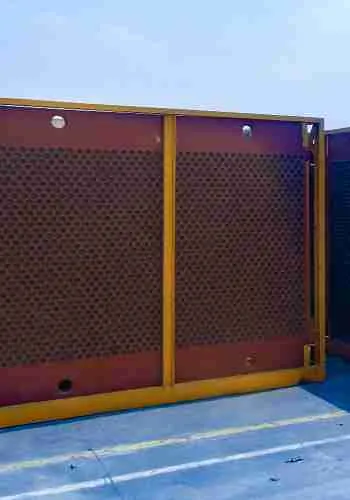
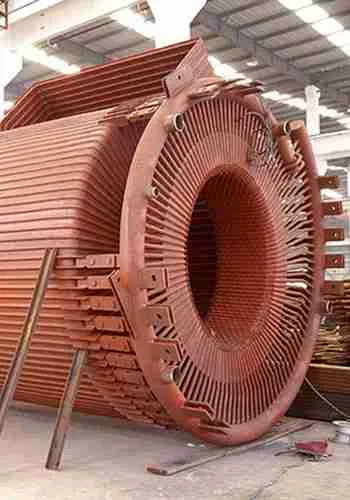
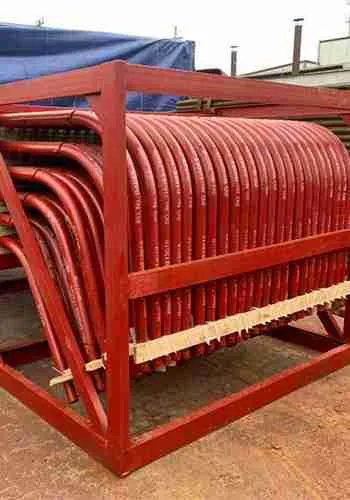
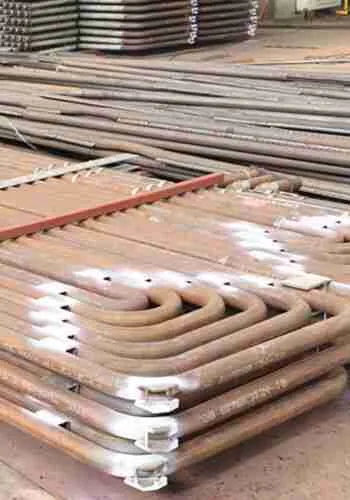
While the economizer’s structure appears simple, it incorporates ingenious designs to enhance heat exchange efficiency. Its main body consists of multiple groups of parallel serpentine steel pipes, with both ends connected by headers to form a continuous water flow channel. The overall design strikes a balance between heat exchange efficiency and operational reliability. As the core heating surface, the serpentine steel pipes are generally made of carbon steel or low-alloy steel, capable of withstanding high temperatures and fly ash erosion; their serpentine shape maximizes the heating area within a limited space, enabling full contact between feed water and flue gas to improve heat exchange performance. The headers primarily function to distribute and collect feed water, and the two arrangement modes of the steel pipes — in-line and staggered — each have their own merits and drawbacks, allowing flexible selection based on different operating conditions. Additionally, modern economizers often adopt finned or membrane structures, which not only further improve heat exchange efficiency but also enhance the equipment’s air tightness and structural strength.
The working principle of the economizer is essentially convective heat transfer, which achieves efficient heat transfer by leveraging the temperature difference between high-temperature flue gas and low-temperature feed water. The entire process is straightforward and easy to comprehend: low-temperature feed water from the deaerator is pressurized by a feed water pump, enters the inlet header of the economizer, and is then evenly distributed to each serpentine steel pipe; high-temperature flue gas discharged from the boiler flows outside the steel pipes, transferring its waste heat to the feed water inside through the pipe walls, while the flue gas temperature gradually drops; the feed water continuously absorbs heat and increases in temperature during flow, eventually being heated to near saturation temperature or generating a small amount of steam (for boiling-type economizers), before being collected by the outlet header and sent to the boiler steam drum to enter the subsequent steam generation process. A set of key data highlights its energy-saving effect: for every 10℃ decrease in exhaust gas temperature, boiler efficiency can be improved by approximately 0.5%. Under normal circumstances, the flue gas temperature can be reduced by 100~200℃ after passing through the economizer, with the final exhaust gas temperature controlled at 120~150℃, demonstrating a remarkable waste heat recovery performance.
Various types of economizers are available to meet different requirements such as boiler pressure and operating conditions. Classified by working fluid state, they can be divided into boiling and non-boiling types, corresponding to high-pressure and medium-low pressure boilers respectively; classified by structural form, they include bare-tube, finned, and membrane types — among these, the finned type is the mainstream choice for modern large-scale boilers, while the membrane type is more suitable for flue gas conditions with high ash content and high flow rate; classified by material, they are divided into cast iron and steel tube types. Due to its high strength and strong pressure-bearing capacity, the steel tube type has become the primary selection for modern boilers.
The value of the economizer extends far beyond “saving coal”; it plays an important role as a “multi-functional asset” in the boiler system. In addition to recovering flue gas waste heat, improving boiler efficiency, significantly reducing fuel costs, and cutting CO₂ emissions, it can also preheat feed water, minimize the temperature difference between the feed water and the steam drum wall, and reduce thermal stress — thereby effectively protecting the boiler and extending its service life. Meanwhile, it can replace some high-cost evaporative heating surfaces, helping to lower the boiler’s manufacturing costs.
Due to long-term operation in complex environments characterized by high temperature, high ash content, and corrosion, the economizer is susceptible to failures such as fly ash erosion, low-temperature corrosion, and internal scaling and blockage, which in turn affect operational efficiency and service life. Therefore, daily inspections should be diligently conducted, focusing on checking inlet and outlet temperatures, pressure, and equipment operating status; regular cleaning of surface ash, detection of pipe wall thickness, and equipment cleaning are essential; in the event of a failure or emergency shutdown, prompt investigation of the cause, cleaning, and maintenance are necessary to ensure the long-term stable operation of the economizer.
Though lacking a gorgeous appearance or complex operational process, the economizer is indispensable in various boiler systems. In a “turning waste into treasure” manner, it achieves multiple values of energy conservation, boiler protection, and cost reduction. As energy efficiency requirements continue to rise, the economizer is constantly upgrading and evolving. In the future, it will develop in a more efficient and reliable direction, continuing to contribute significantly to energy conservation, emission reduction, and efficient energy utilization.