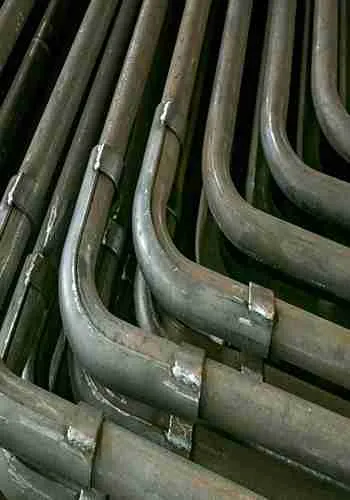
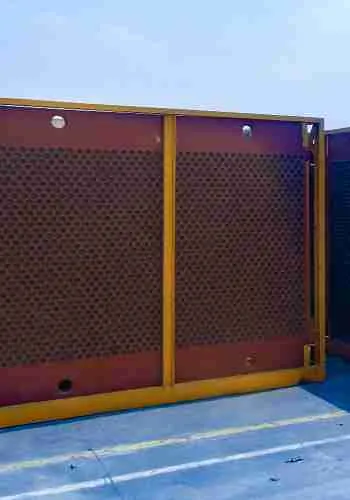
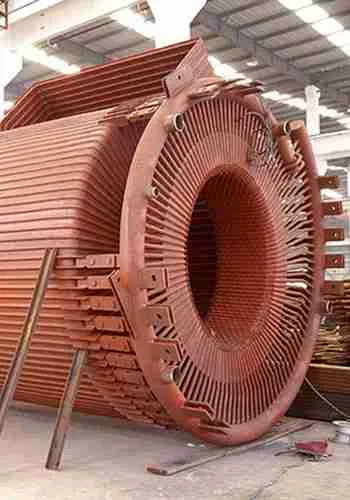
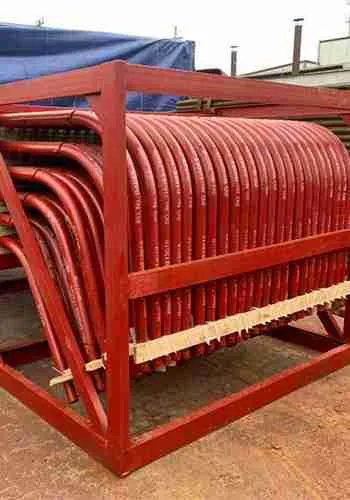
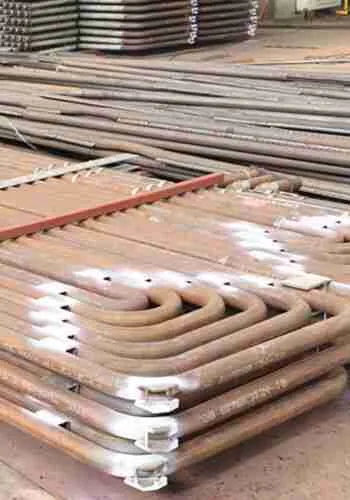
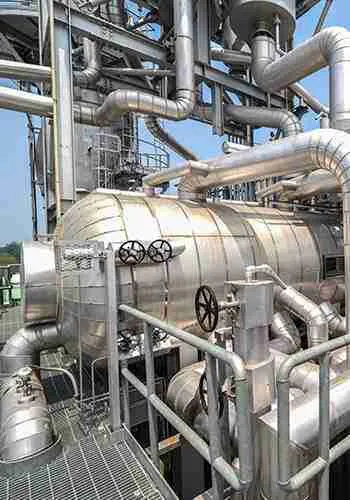
An evaporator is a core industrial device that utilizes phase-change heat transfer to achieve heat transmission and material separation. It serves not only as one of the four fundamental components in refrigeration systems but also as critical equipment for material concentration, crystallization, and wastewater reduction across the chemical, environmental, food, and pharmaceutical industries. Capitalizing on its highly efficient phase-change heat absorption capabilities, the evaporator adapts to diverse scenarios—including civil temperature control, industrial manufacturing, and environmental governance—making it a foundational piece of equipment in modern industry.
I. Core Working Principle
The core principle of an evaporator revolves around phase-change heat absorption and heat transfer. It operates within two primary application systems:
Refrigeration & Temperature Control: Low-temperature, low-pressure liquid refrigerant enters the device and boils due to depressurization. It continuously absorbs heat from the surrounding medium and vaporizes rapidly, thereby lowering the temperature of air or water. This is widely used in air conditioners, cold storage, and industrial chillers.
Industrial Material Processing: The material liquid is heated inside a heating chamber, causing water and volatile components to vaporize. A separation chamber then decouples the vapor from the liquid, achieving material concentration, purification, crystallization, and wastewater reduction. It can operate under atmospheric, reduced (vacuum), or positive pressure to accommodate different material characteristics and ensure production quality.
II. Basic Structure
Industrial evaporators feature a modular, streamlined structure consisting of five core modules:
Heating Chamber: Responsible for high-efficiency heat exchange and temperature-driven phase changes.
Separation Chamber: Prevents material entrainment to achieve pure vapor-liquid separation.
Material Circulation System: Ensures uniform material flow and effectively prevents scaling and dry-walling.
Inlet/Outlet Interfaces: Facilitates the controlled entry and exit of materials and utilities.
Control System: Precision-regulates temperature, pressure, and flow rates to support long-term, automated, continuous, and stable operation.
III. Main Types and Core Characteristics
To address varying working conditions and material properties, mainstream evaporator types offer distinct adaptability across all industrial scenarios:
| Evaporator Type | Core Characteristics & Mechanisms | Best-Fit Application Scenarios |
| Dry Evaporator | Single-pass heat exchange; compact footprint, simple maintenance, resistant to scaling and oil accumulation with stable heat transfer. | Central air conditioning, commercial refrigeration, and small-to-medium industrial temperature control. |
| Flooded Evaporator | Heat exchange tubes are completely submerged in the refrigerant; high utilization of the heat transfer area and powerful cooling effect. | Large-scale low-temperature refrigeration units (Drawback: large equipment volume and high refrigerant charge). |
| Falling Film Evaporator | Material forms a uniform film for heat exchange; operates in low-temperature vacuum environments with uniform heating and minimal degradation. | Heat-sensitive materials like fruit juices and pharmaceutical liquids; preferred in food and pharma industries. |
| Rising Film Evaporator | Utilizes vapor flow to drive the material into a film for heat exchange; high efficiency and supports continuous production. | Concentration of low-viscosity, non-crystallizing chemical dilute solutions. |
| Forced Circulation Evaporator | A pump forces high-speed material flow; effectively solves problems related to high viscosity, easy crystallization, and severe scaling. | Harsh conditions like high-salt wastewater and concentrated chemical feeds; highly resistant to clogging. |
| MVR Evaporator (Mechanical Vapor Recompression) | Next-gen energy-saving equipment; uses a compressor to reuse secondary vapor heat, drastically reducing external energy consumption. | Large-scale wastewater treatment and material concentration/crystallization; a staple in environmental protection. |
| Multi-Effect Evaporator | Connects multiple units in series to recover and reuse vapor thermal energy step-by-step; stable capacity and highly efficient. | Double-effect, triple-effect, or multi-effect models for medium-to-large chemical, food, and environmental water treatment projects. |
IV. Core Advantages
Broad Adaptability: Through process and structural adjustments, it can handle heat-sensitive, high-salt, high-viscosity, and easily crystallizing materials, spanning civil, light industrial, heavy industrial, and environmental protection sectors.
High Heat Exchange Efficiency: Optimized structures—such as thin-film heat exchange and forced circulation—yield high heat utilization rates, rapid evaporation speeds, and excellent material processing efficiency.
Outstanding Energy Savings: MVR and multi-effect evaporation technologies enable the recycling of vapor energy, reducing energy consumption by more than 30% compared to traditional equipment, effectively controlling corporate operating costs.
Stable, Durable, and Easy to Maintain: Manufactured via standardized processes and paired with non-destructive testing (NDT) and anti-scaling designs, these systems support long-term continuous operation with low failure rates and convenient maintenance.
Support for Non-Standard Customization: Systems can be tailor-made based on site dimensions, material properties, and capacity requirements to flexibly match diverse and unique production conditions.
V. Primary Application Fields
Environmental Protection: Used for the reduction, crystallization, compliant discharge, and resource recovery of high-salt, electroplating, and pharmaceutical wastewaters, as well as concentrated brine.
Chemical Industry: Focuses on solution concentration, solute purification, and intermediate crystallization.
Food & Pharmaceuticals: Leverages low-temperature processes to preserve active ingredients while completing concentration and purification.
Refrigeration & Utilities: Acts as a core component in various refrigeration and temperature control systems widely applied in metallurgy, new energy, fertilizer processing, and many other industries.
VI. Core Selection Points
Evaporator selection must align closely with actual working conditions:
For heat-sensitive materials: Prioritize falling film evaporators.
For harsh conditions (high salt, easy crystallization): Opt for forced circulation or MVR evaporators.
For small-scale production: Choose single-effect equipment.
For large-scale industrial projects: Prefer multi-effect or MVR systems.
Simultaneously, comprehensively evaluate energy costs, space constraints, and maintenance complexity to match the optimal equipment solution for efficient, low-cost, and stable production.
Conclusion
Evaporators are indispensable pieces of equipment for heat exchange and separation, cutting across civil temperature control, industrial production, and environmental governance. Currently, the industry is upgrading toward energy efficiency, automation, intelligence, and low-scaling/low-consumption designs. Driven by their strong adaptability, stable performance, and energy-saving advantages, evaporators continue to improve quality and reduce costs across all sectors, remaining a vital cornerstone of modern industry.