In the landscape of global industrial manufacturing, few sectors embody the tension between tradition and innovation as intensely as the boiler industry. Historically seen as a mature, even stagnant field, it is now at the epicenter of the world’s energy transition. At the forefront of this quiet revolution is Zhangjiagang DHB Boiler Co., Ltd. , a company whose online presence at dhbboiler.com reveals not just a product catalog, but a strategic blueprint for leading in the age of sustainable industry.
DHB’s story is no longer just about manufacturing excellence; it is about architecting integrated energy ecosystems. The company’s evolution from a specialist boiler manufacturer to a provider of comprehensive “Turnkey Energy Solutions” reflects a broader recalibration of “Made in China” on the global stage—shifting from component supplier to strategic partner and technology enabler.
I. The Platform as a Proposition: A Digital Window into Industrial Capability
The DHB website serves as a dynamic technical and commercial dossier. Beyond showcasing products like CFB Boilers, Waste Heat Boilers , Biomass Boilers, and Oil & Gas Fired Boilers, it systematically presents the pillars of its value proposition:
- Engineering Depth: Detailed 3D models, cutaway diagrams, and technical white papers (e.g., on welding P91/T24 steels or designing for high-ash fuels) demonstrate a command of underlying engineering physics, not just assembly.
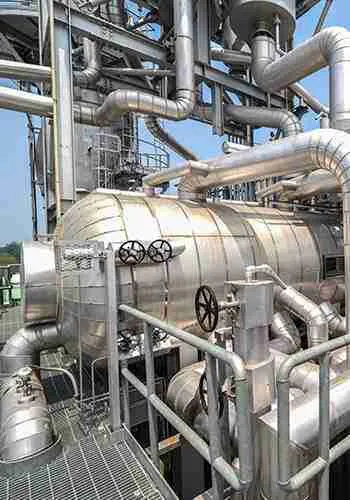
- System Integration: The site emphasizes its role in supplying not just the pressure vessel, but the entire “island”—including economizers, superheaters, cyclones, air preheaters, and advanced SNCR/SCR systems for emission control. This highlights a capacity for seamless system orchestration.
- Global Compliance as a Baseline: The prominent display of ASME S/U stamps, ISO 3834-2, EN 12952/EN 12953, and other certifications is framed not as a trophy case, but as a statement of fundamental operational DNA. It communicates that every project starts on a foundation of globally recognized safety and quality protocols.
II. Mastering the Fuel-Agnostic Future: Flexibility as a Core Technology
A key insight from DHB’s portfolio is its focus on fuel flexibility and waste valorization—a critical capability for a decarbonizing world. Their expertise spans:
- Biomass & Waste-to-Energy : Designing boilers that handle heterogeneous, often corrosive, and high-moisture fuels like agricultural residue, municipal solid waste , and refuse-derived fuel . This requires advanced grate designs, sophisticated combustion controls, and materials resistant to chlorine and alkali corrosion.
- Advanced Heat Recovery: Their HRSG solutions for gas turbines, silicon production, and chemical plants showcase an ability to capture low-grade, intermittent waste heat and transform it into reliable steam power, dramatically improving overall plant efficiency.
- Clean Fossil Utilization: Even for coal and gas, DHB promotes ultra-low emission designs, high-efficiency circulating fluidized bed technology for difficult fuels, and readiness for carbon capture integration.
This fuel-agnostic engineering philosophy positions DHB not as a vendor for a single energy paradigm, but as a resilient partner for clients navigating uncertain fuel markets and evolving environmental regulations.
III. The Digital Thread: Data-Driven Design, Manufacturing, and Lifetime Service
Implicit in DHB’s presentation is the integration of digital tools throughout the value chain:
- Advanced Design & Simulation: Utilizing Computational Fluid Dynamics (CFD) and Finite Element Analysis (FEA) to optimize combustion, heat transfer, and structural integrity before metal is ever cut. This virtual prototyping minimizes risk and maximizes performance.
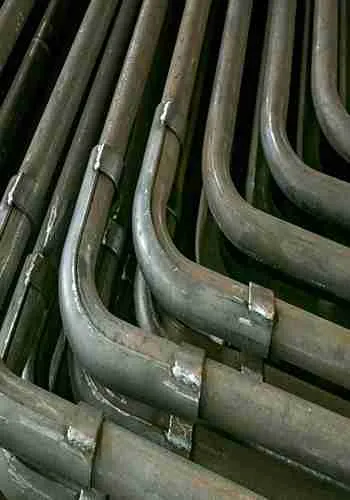
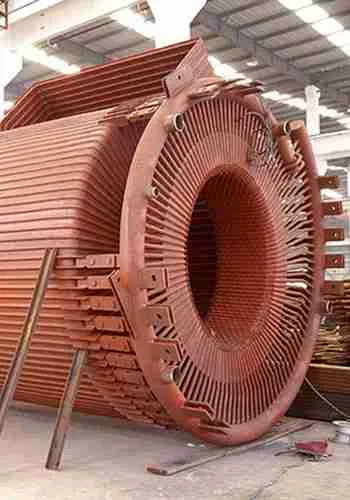
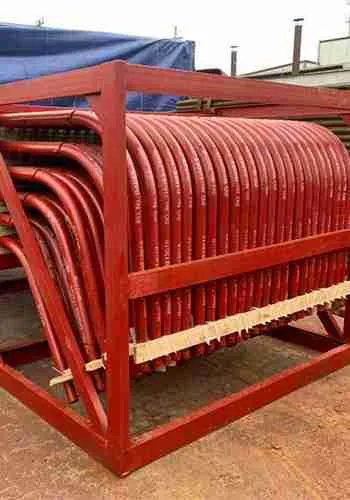
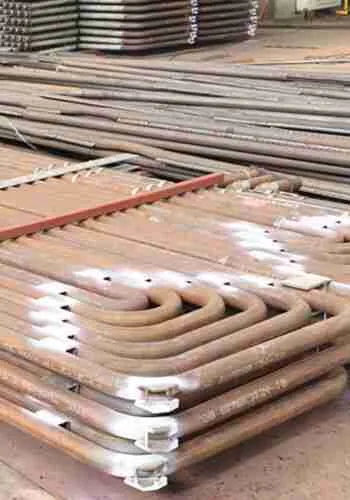
- Precision Manufacturing: The website’s gallery of automated welding robots, CNC tube benders, and modular assembly lines depicts a facility where digital instructions flow directly to machinery, ensuring millimeter-perfect consistency, especially for complex membrane walls and serpentine tube panels.
- Predictive Service Models: DHB’s emphasis on “lifetime technical support” suggests a move towards remote monitoring, digital twins, and predictive maintenance. The boiler becomes a data-generating asset, allowing for optimized operation and pre-emptive intervention, thereby maximizing uptime and lifecycle value.
IV. The “Turnkey” Imperative: Delivering Certainty in Complex Environments
The most significant strategic theme on dhbboiler.com is the repeated emphasis on EPC (Engineering, Procurement, Construction) and Turnkey Project capability. This is particularly relevant for emerging markets and independent power producers .
For a client in Southeast Asia or Africa building a biomass plant, DHB offers to be a single point of responsibility:
- Feasibility & Design: Customizing the plant to local fuel specs and grid requirements.
- Global Sourcing & Manufacturing: Leveraging its supply chain for cost-effective, quality-controlled component production.
- Logistics & Commissioning: Managing the complex transport of oversized equipment and ensuring proper on-site erection and startup.
- Training & Operational Support: Transferring knowledge to local operators for sustainable long-term management.
This model reduces owner risk, compresses project timelines, and ensures performance guarantees are backed by integrated expertise. It transforms DHB from a box seller into a value-chain manager and de-risking partner.
V. Case Studies in Geography: A Map of Trust and Adaptation
The project references section—spanning 36 countries from Vietnam to Chile, Turkey to South Africa—is a narrative in itself. Each case study is a story of adaptation:
- A boiler designed for rice husk in Thailand.
- An HRSG for a petrochemical plant in Oman.
- A coal-fired CFB unit for a remote mining operation.
This geographic and functional diversity proves a capacity to understand local contexts, comply with regional standards, and solve specific industrial challenges. It builds a reputation not on homogeneity, but on reliable customization.
VI. Conclusion: Redefining the “Iron Triangle” – Cost, Quality, and Now, Sustainability
DHB Boiler’s online narrative encapsulates the new competitive triad for heavy industry in the 21st century:
- Uncompromising Quality & Safety: The non-negotiable foundation, assured by deep metallurgical knowledge and certified processes.
- Total Lifecycle Economics: Competing on cost-per-steam-ton over 30 years, not initial purchase price, enabled by efficiency, durability, and supportive services.
- Environmental & Social Governance Alignment: Providing the technological means for clients to reduce emissions, utilize waste, and contribute to circular economies. The boiler becomes a tool for sustainability reporting.
In conclusion, dhbboiler.com documents the journey of a company that has successfully navigated the shift from hardware manufacturer to solution integrator. DHB Boiler understands that in today’s world, one does not simply sell a boiler. One sells energy security, operational certainty, regulatory compliance, and sustainability outcomes.
Their story is a potent microcosm of Chinese advanced manufacturing: leveraging scale and engineering talent to master complex, customized industrial systems; embracing global standards as a starting point; and using digital integration to deliver not just products, but predictable performance. They are quietly building the robust, flexible, and efficient thermal energy backbone required to power both industry and the transition to a lower-carbon future. In doing so, DHB is not just following market trends—it is helping to engineer them.