Introduction: The End is Not the End
Every boiler built today will eventually be decommissioned. This is an inevitability of industrial equipment—the relentless progression of creep, fatigue, and corrosion that limits useful life to some finite number of operating hours. For decades, “decommissioned” has been synonymous with “scrapped.” The boiler that powered a factory for thirty years ends its life as scrap metal, recycled for its material value but lost as an engineered system.
But in an era defined by circular economy principles and carbon constraints, this linear path from construction to scrap is increasingly untenable. The embodied carbon in a boiler—the emissions generated during steelmaking, component fabrication, and transportation—represents a significant environmental investment. Writing off that investment after a single life cycle is a luxury the planet can no longer afford.
This article introduces a forward-looking concept: designing boilers for second-life applications. What if a coal-fired boiler could be economically retrofitted for biomass in 2040? What if a waste-to-energy unit could be repurposed for industrial heat recovery after its municipal contract expires? What if the superheater from a retired power station found new life in a different facility, with different operating conditions?
These questions are not theoretical. They are emerging as critical considerations for project financiers, sustainability officers, and plant operators who recognize that the most sustainable equipment is the equipment that keeps working .
Part I: The Circular Economy Imperative
The traditional linear economy—take, make, use, dispose—has dominated industrial thinking for two centuries. But its limitations are becoming impossible to ignore. Resource scarcity, supply chain vulnerability, and climate change are forcing a fundamental reconsideration of how we design, use, and value industrial assets.
Embodied Carbon: The Hidden Investment
Consider the carbon footprint of a typical industrial boiler. Every ton of steel in its pressure parts required approximately two tons of carbon dioxide emissions during production. Every weld consumed energy and filler metal. Every component was shaped, machined, transported, and assembled—each step adding to the total embodied carbon.
When a boiler is scrapped after a single life cycle, all that embodied carbon is effectively written off. The steel may be recycled, but recycling itself requires energy and generates emissions. The engineered value—the precision of the welds, the optimization of the design, the integration of the systems—is lost forever .
In a carbon-constrained world, this linear model is economically and environmentally unsustainable. The circular economy offers an alternative: extend asset life, recover value at end-of-life, and design from the beginning for future adaptation.
The Emerging Policy Landscape
Regulatory frameworks are beginning to reflect circular economy principles. The European Union’s Circular Economy Action Plan includes provisions for eco-design that considers durability, reparability, and recyclability. Carbon pricing mechanisms increasingly recognize the value of life extension. Some jurisdictions are exploring “material passports” that document the composition and condition of industrial assets to facilitate future reuse .
These policy trends will only intensify. Plant owners who ignore them risk holding assets that are prematurely stranded—not because they have failed mechanically, but because they cannot be economically adapted to changing regulations or market conditions.
Part II: The Technical Dimensions of Second-Life Design
Designing for second-life applications requires a fundamental shift in engineering thinking. Instead of optimizing solely for first-life performance, designers must consider how their decisions will enable—or constrain—future adaptation.
Modular Architecture
The most adaptable boilers are those built on modular principles. When components are designed as discrete, separable modules, they can be individually upgraded, replaced, or repurposed without disturbing the entire system.
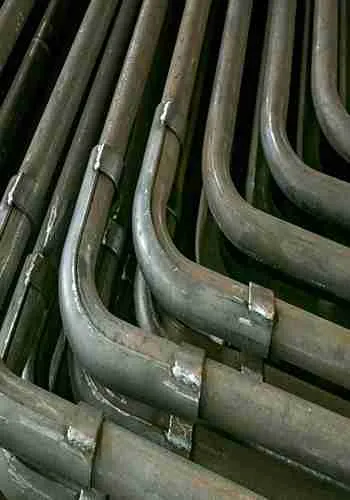
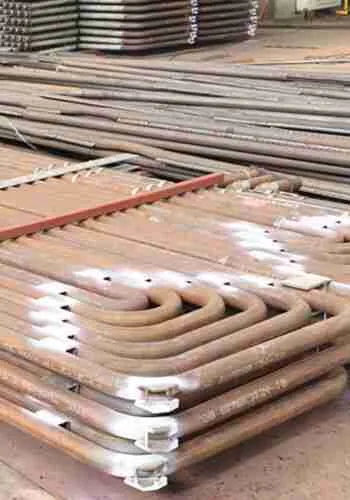
Consider a superheater section designed with bolted or welded connections that can be cut and re-welded with reasonable effort. Twenty years later, when a plant converts from coal to biomass, that superheater can be removed and replaced with a corrosion-resistant module optimized for the new fuel—while the rest of the boiler continues in service .
Modularity extends beyond pressure parts. Control systems with standardized interfaces can be upgraded as technology advances. Insulation systems designed for easy removal and replacement facilitate inspection and repair. Support structures with预留 space for additional components accommodate future expansion.
Material Selection for Future Unknowns
Material choices made today determine what future adaptations are possible. A superheater built from standard carbon steel may be perfectly adequate for its first life in a coal-fired plant. But if that plant later converts to biomass firing, the carbon steel will fail rapidly from chlorine-induced corrosion. The plant owner faces a choice: expensive replacement of the superheater, or continued operation with escalating risk .
Designing for second-life applications means selecting materials with future uncertainty in mind. Where economically feasible, specifying higher-grade alloys than first-life requirements demand creates options for future fuel flexibility. Applying corrosion-resistant cladding or coatings in areas that may face more aggressive conditions later provides insurance against unknown futures.
This approach requires balancing first-cost against long-term value—a calculation that increasingly favors the latter as carbon prices rise and regulatory uncertainty grows.
Design for Inspection and Assessment
Second-life adaptation depends on knowing the condition of existing components. A boiler that has operated for 100,000 hours may have significant remaining life in some sections while others are near failure. Without detailed condition assessment, safe adaptation is impossible.
Designing for inspectability means creating access for non-destructive examination. It means avoiding geometries that trap inspection tools or obscure critical areas. It means providing reference points for wall thickness measurements and locations for permanent monitoring sensors .
Some forward-thinking designers are incorporating “condition monitoring features” into new builds—strategically placed test coupons that can be removed and analyzed to assess material degradation without cutting into pressure parts. These features cost little at construction but provide immense value during life extension assessments decades later.
Part III: Real-World Models of Boiler Repurposing
The concept of second-life boilers is not purely theoretical. Across the globe, innovative plant owners and engineering firms are finding new uses for aging equipment.
Fuel Switching Conversions
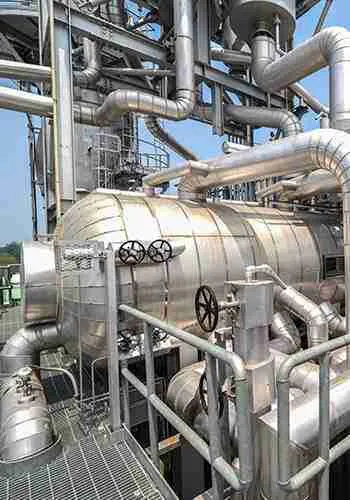
The most common form of boiler repurposing is fuel switching. Coal-fired boilers converted to biomass are now operating in dozens of countries, their pressure parts largely unchanged but their combustion systems radically modified .
These conversions demonstrate both the potential and the limits of second-life design. Boilers originally built with generous material margins and conservative design temperatures can often accommodate fuel switching with manageable modifications. Those built with minimal margins face tighter constraints and may require more extensive upgrades.
The success stories share common elements: original designs that considered future flexibility, comprehensive condition assessments before conversion, and targeted upgrades to address the specific challenges of the new fuel .
Waste Heat Recovery Applications
Another promising second-life pathway is repurposing retired power boilers for waste heat recovery. A boiler that can no longer meet the pressure and temperature requirements of power generation may still have decades of useful life in lower-temperature industrial applications .
Consider the case of温州沙头工业区, where waste heat from a garbage incineration plant now provides steam to nearby factories through a district heating network. What was once “waste” energy has become a valuable resource, reducing both costs and emissions for the entire industrial cluster .
This model can be extended to retired equipment. A decommissioned power boiler, relocated to an industrial site and integrated with a waste heat source, can provide steam for processes that would otherwise burn fresh fuel. The embodied carbon in the boiler continues to deliver value, rather than being written off as scrap.
Component Harvesting and Redeployment
The most granular form of boiler repurposing involves harvesting individual components for reuse elsewhere. Superheaters with remaining creep life can be installed in other boilers. Valves and instrumentation can be refurbished and redeployed. Pressure parts with acceptable wall thickness can be cut down and re-welded into new configurations .
This approach requires meticulous documentation of component history and condition. A superheater removed from service after 80,000 hours has known operating parameters—temperatures, pressures, cycles—that enable accurate remnant life assessment. With that knowledge, an engineer can confidently specify its reuse in a new application, ensuring safety while extracting maximum value from the original investment .
Part IV: The DHB Commitment to Lifecycle Value
At DHB Boiler, we build equipment for the long term. Our design philosophy, material selection criteria, and quality systems are all oriented toward a single goal: maximizing the value our clients receive over the entire life of their assets—including potential second lives we cannot yet imagine.
Documentation for Future Generations
The most valuable gift we can give future engineers is information. When we manufacture a component, we document not just its final dimensions and test results, but the entire chain of decisions that produced it—material certifications, welding parameters, heat treatment cycles, inspection records.
This documentation enables condition assessment decades later. When a plant operator in 2045 asks “How much life remains in this superheater?”, they will have access to the same data we generated in 2025. They will know the starting point from which all degradation has proceeded .
Design Margin as Future Option
We design our components with margins that reflect not just today’s requirements, but tomorrow’s possibilities. Our material selections consider the range of fuels a client might fire over the equipment’s life. Our welding procedures prioritize long-term stability over short-term economy. Our quality systems ensure that every component leaving our factory meets standards that will be recognized and trusted for decades.
These choices cost something today. But they create options for the future—options that become increasingly valuable as operating conditions change and second-life opportunities emerge.
Partnership Across Lifecycles
We stay engaged with our clients long after equipment delivery. We support condition assessments that identify remaining life and potential for extension. We provide engineering guidance for modification and repurposing. We help document operating history so that future decisions can be made with full information.
When a DHB boiler reaches the end of its first life, we want its owner to think not “What do we do with this scrap?” but “What new life can this equipment live?” That is the partnership we seek—a relationship that spans decades and delivers value across multiple lifecycles.
Conclusion: The Boiler That Keeps Giving
The most sustainable boiler is not the one with the highest efficiency or the lowest emissions. It is the one that keeps working, delivering value year after year, adapting to changing conditions and finding new purposes as old ones fade.
This is the promise of second-life design. By building for adaptability, documenting for future assessment, and partnering for the long term, we can break the linear pattern of “build-use-scrap” that has dominated industrial thinking for too long. We can create equipment that delivers not one life of value, but multiple lives.
At DHB Boiler, we are committed to that vision. Every component we build is designed with an eye to the future—your future, your children’s future, and the future of the planet we all share. When you choose DHB, you are not just buying equipment for today. You are investing in assets that will keep giving, long after the first life ends.
The boiler after you is not an afterthought. It is part of the design from the beginning.